Window Treatments: Tips and Tricks for Layered, Functional Beauty
The treatment of windows can make or break the final feel of a room. Thoughtful window treatments do far more than regulate light; they add depth, provide insulation against heat or cold, and anchor a scheme in a way few other elements can. When done well, they bring both calm and character, supporting how a room is used by day and how it feels by night.
The key is layering, but always with intention. Function should lead every decision, with beauty following naturally.
Sheer Base Layers
A lightweight sheer curtain or voile is an effective layer, particularly in rooms that receive strong or direct sunlight. Rather than blocking light entirely, sheers gently diffuse it, softening glare while preserving brightness.
Natural fibres such as linen work especially well, offering an airy, relaxed quality. Sheers are also invaluable in homes that feel overlooked or exposed, providing privacy without sacrificing daylight. In one project with visible external security grilles, we used sheers to specifically soften what could otherwise have felt stark when doors and windows were closed. A slim track mounted close to the ceiling allowed the fabric to fall from height, visually elongating the window and making the room feel more generous.
Add Texture, But Avoid Overcrowding
Layering should never feel heavy or overcomplicated. While texture is important, piling multiple treatments on top of one another can quickly look messy.
Woven shades or Roman blinds made from bamboo or natural fibres work beautifully as a secondary element, either on their own or paired thoughtfully with curtains. These introduce warmth and tactility, but we tend to avoid placing woven blinds directly over sheers unless there is a clear functional reason.
Roman blinds, in particular, offer an opportunity for detail. They don’t always need to sit tightly within the window frame; they can introduce colour through ties, bows or contrasting linings. Lining a Roman blind with a patterned fabric means the design is revealed when the blind is raised, a detail that can be especially pleasing when viewed from outside the house. Fabric choice here is crucial, as strong sunlight will inevitably affect delicate textiles.
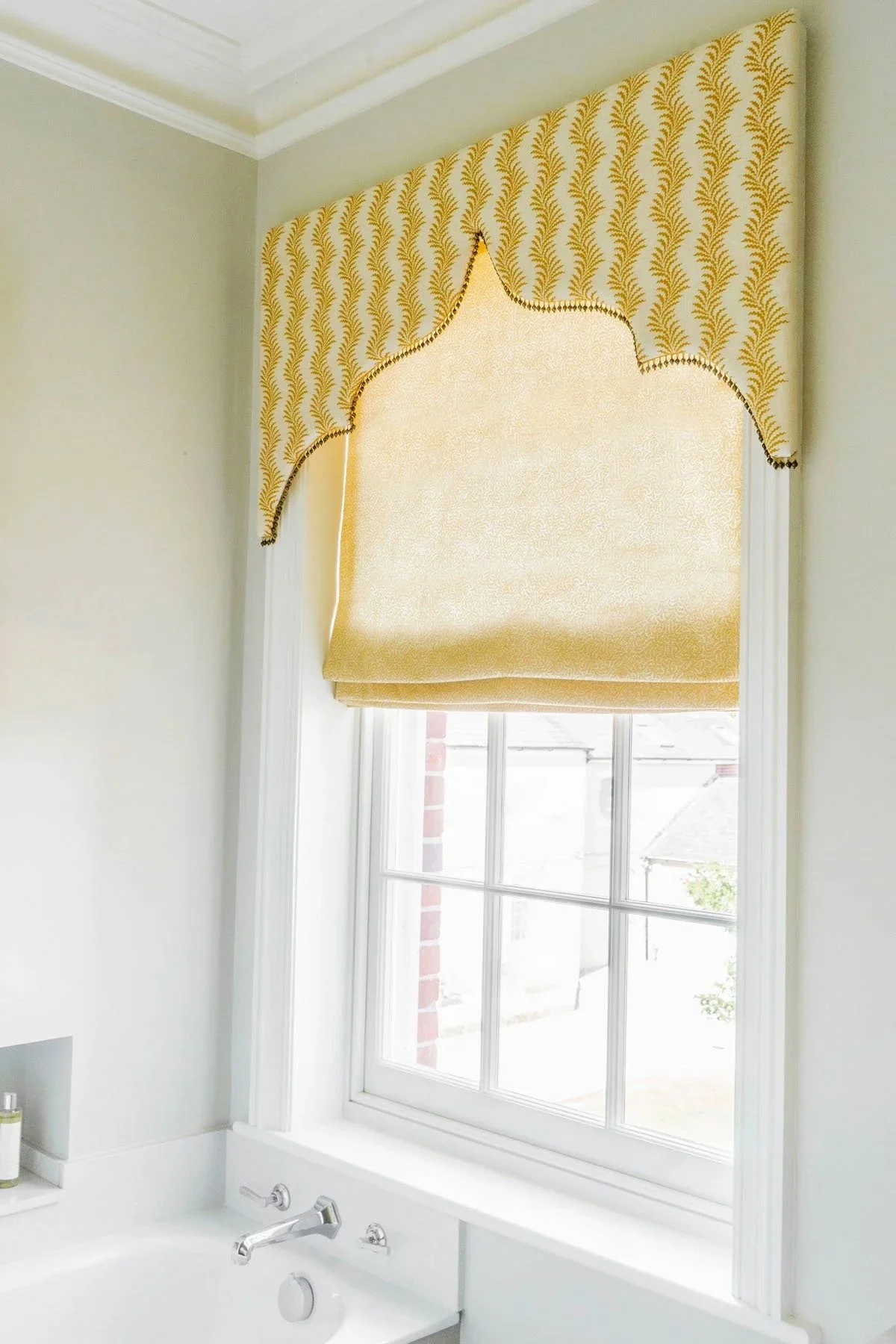
Fitting the blind outside and above the window frame is a clever way to give a window more presence, that will widen and heighten the scale of the window treatment.
Café Curtains, Roman Blinds and Half Shutters
Half-height shutters offer a similar benefit. Fitted within the recess, they provide excellent light control and privacy while maintaining a clean, architectural look. When combined with curtains above, the result feels layered rather than clinical, particularly effective in bathrooms or coastal properties.

Café curtains are a popular and practical solution for kitchens, bathrooms and street-facing rooms. Covering only the lower half of a window, they provide privacy while allowing light to flood in above. When paired with a Roman blind or curtain panel, they strike a balance between function and softness.
Curtains as the Anchor of the Scheme
The real impact of a good pair of curtains is often felt in the evening, when they are closed and become a dominant visual element in the room.
I approach curtain selection by looking at everything else in the space first. Sometimes the curtain fabric becomes the element that visually anchors the room, echoing tones from rugs, upholstery or artwork. The question to ask yourself is, whether the room needs to feel calm and understated at night, or decorative and expressive. The answer should guide your choice of both pattern and scale.
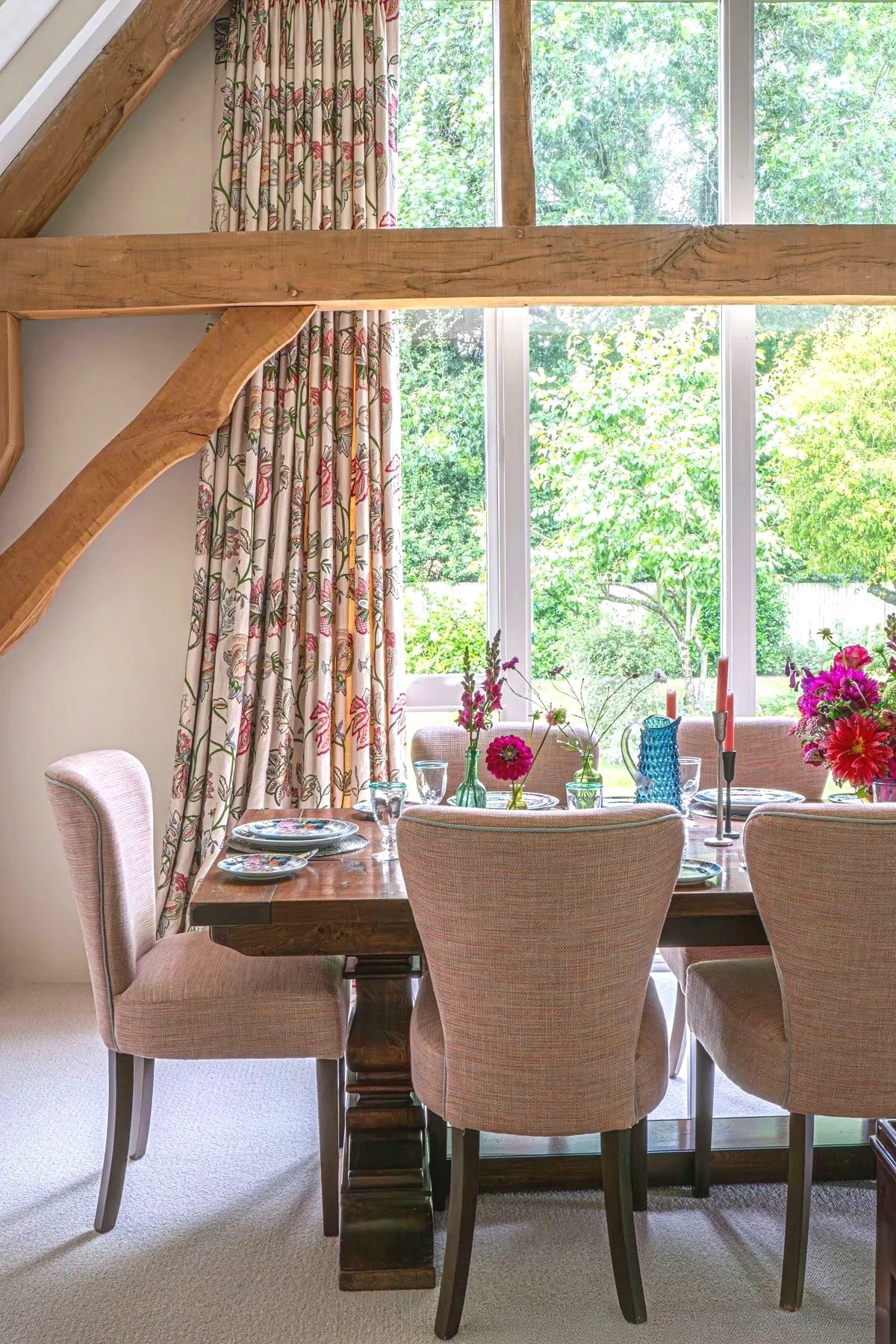
Mixing textures works best when one element leads. A richly patterned curtain paired with a simpler blind, or heavy velvet drapes layered over a delicate sheer, creates contrast without competition.
Colour Drenching and Contemporary Approaches
Colour drenching - where walls, trim and curtains sit within the same tonal family - continues to gain momentum into 2026. Used thoughtfully, it can make a room feel larger, calmer and more cohesive, particularly in bedrooms or studies.
For a more contemporary look, full ceiling-to-floor drapes on discreet track systems create a seamless, architectural effect. This approach works best with lighter or subtly patterned fabrics; heavy embroidery can quickly become bulky and undermine the clean lines. Fabric weight should always support the mood of the room - heavier for intimacy and warmth, lighter for airiness and light.
Technology and Innovation
Motorised blinds and curtains are becoming increasingly accessible and are no longer reserved for ultra-luxury homes. They are especially useful for tall or hard-to-reach windows and can be programmed to open and close at set times, enhancing both comfort and energy efficiency.
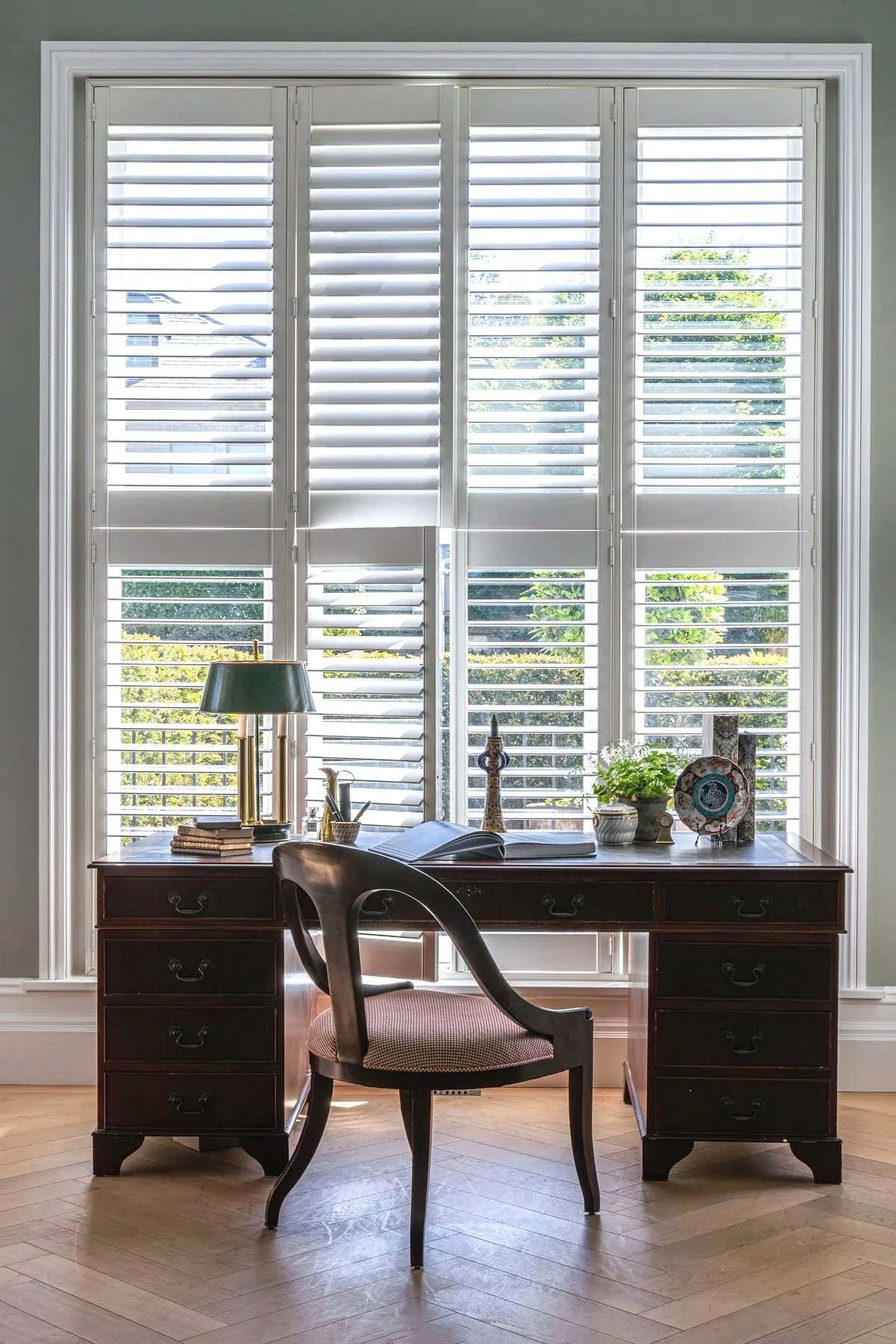
Shutters, meanwhile, continue to prove their longevity. Their ability to bridge traditional and contemporary interiors makes them a modern classic.
Function Comes First
While window treatments are undeniably decorative, their primary role is functional. Always consider orientation, privacy requirements and insulation needs. Bedrooms may require blackout lining or interlining for warmth and darkness; living spaces may benefit from layered sheers and lined curtains. In rooms where heat, moisture or direct
sunlight are factors, fabric choice becomes even more critical, delicate silks, for example, can deteriorate quickly in strong sun.
It’s also worth remembering that not every window treatment needs to function. Sometimes, a false blind or a pretty decorative layer can be just what a room needs.
Window treatments are a crucial layer in any interior scheme. When designed thoughtfully, they enhance both the look and the experience of a space, providing that finishing touch that makes a scheme feel comfortable and real.