How to Mix Patterns in Interior Design - and the Role of the Hero Fabric
Mixing pattern is one of the most expressive tools in interior design. When it is done well, a room feels confident and full of life. When it is done without a clear direction, it can feel unsettled or overwhelming. The difference almost always comes down to one important decision made at the very beginning: choosing the hero fabric.
Pattern should be used in a deliberate way, to set the mood of a space and to give a scheme its identity. For those who love pattern, mixing it with intention is key. Once the direction is clear, pattern becomes a unifying force rather than a disruptive one.

A sample mood board for a layered bedroom scheme
The Hero Fabric as the Starting Point
The hero fabric is the foundation of a pattern-led scheme. It is the fabric with the strongest voice in the room, whether through colour, scale, motif or texture. It might appear as a curtain, a statement armchair, a headboard, or even a wallpaper. Whatever form it takes, it establishes the emotional direction of the space.
Once the hero fabric is chosen, every other decision can respond to it. Rather than trying to match everything perfectly, successful interiors take cues from this lead element. Colours are lifted out and repeated elsewhere in quieter ways. Supporting patterns are chosen not because they are similar, but because they deliberately contrast. When patterns are too alike in scale or style, they compete; when they are thoughtfully varied, they enhance one another.
Scale, Hierarchy and Balance
Scale plays a crucial role in mixing pattern. A room feels more composed when there is a clear hierarchy. Larger-scale designs tend to work best as the lead, with medium and smaller patterns supporting them through cushions, secondary upholstery or soft furnishings. This layered approach gives the eye somewhere to rest and prevents the space from feeling visually flat.
Interestingly, smaller rooms often benefit from more pattern rather than less. When pattern is applied with confidence, it can make a compact space feel cohesive and enveloping rather than busy. The key is commitment: hesitation is what causes a scheme to feel unresolved.
Pattern is Not Always Loud
Pattern does not have to mean bold or garish. Some of the most successful interiors rely on pattern within pattern: a subtle stripe, a softly textured weave, or a fabric with a barely perceptible motif. These elements add depth and interest without overwhelming the room. What matters is that nothing feels flat.
Texture often does as much work as colour. A strié, a small repeat or a raised weave can bring life to a space while remaining understated. These quieter patterns are invaluable in balancing stronger elements elsewhere.
Placement Matters
Where pattern is used is just as important as how much of it there is. Stronger patterns often work best where they can be appreciated up close, such as on seating, curtains or bedroom textiles. Elsewhere, a lighter touch allows the scheme to breathe. Pattern does not need to be spread evenly across a room; it should be placed where it will have the greatest impact.
The Power of the Unexpected
Not every pattern or colour needs to be perfectly coordinated. In fact, introducing something unexpected can often lift a scheme. A flash of red, a hint of pink, or an almost neon accent (used sparingly!) can bring energy and confidence to a room. While it may initially feel risky, these moments often become what gives a space its personality.
This is similar to decorating a Christmas tree: a scheme that is too “matchy” can feel flat, whereas an eclectic approach, with one surprising element, brings it to life. If committing to this through fabric feels daunting, introducing a natural element, such as fresh flowers in an unexpected colour, is a gentle way to test the effect. Often, what initially feels random suddenly just works.
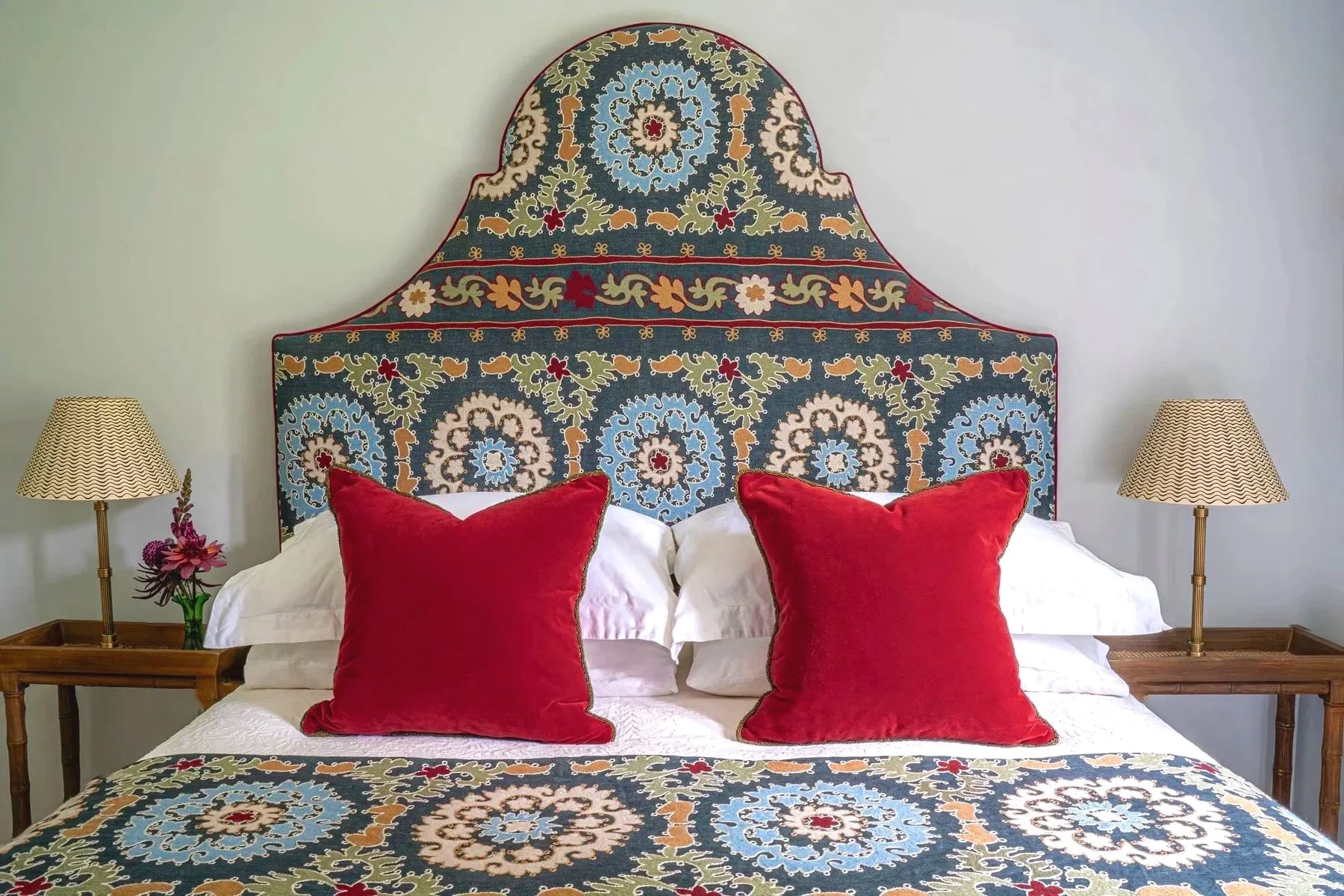
A bold pattern making a statement in a small room
Confidence Is the Missing Ingredient
Perhaps the most overlooked element in mixing pattern is confidence. A scheme that fully commits to its hero fabric will always feel more resolved than one that holds back. Mixing pattern is not about strict rules or formulas. It is about balance, scale and mood, and allowing one strong idea to guide the rest. When approached this way, pattern becomes not something to fear, but one of the most rewarding tools in interior design.